Historic restoration
Restoring A Historic House Without Losing Its Character
Old houses were built by people who knew what they could do with the materials they had. Our job on a restoration is to tell the difference between what is worn and what is failing, keep the first, and rebuild the second so it matches. We started Den & Burrow in 2021 on faith, family, humility, and innovation. On a historic property, humility does the most work. The house was here first.
Start By Reading The House
Before we write a scope we spend time in the building. We look at how the structure carries load, where water has gotten in, how the additions were attached and roughly when, and which details are original. Old photographs, the county record, and the layers of finish inside a closet all tell you something. Most historic houses have been modified several times, and not every modification deserves protection. Deciding which era you are restoring settles half the scope before a single demolition day is scheduled.
What We Keep
Keep the things you can’t buy back. Original wood windows can usually be repaired: sashes reglazed, cords replaced, frames tightened, weatherstripping added, with a storm window outside for performance. Old growth trim, doors, and hardware are worth stripping and rehanging. Plaster that is sound, even where it is cracked, can be keyed back and skim coated. Stair parts, mantels, built-ins, and the original floor boards almost always stay. So does the exterior character: rooflines, porch proportions, masonry, and the rhythm of the windows on the street face. Those are the things that make people call a house beautiful, and once they’re gone the project reads as new construction wearing an old address.
What We Rebuild
Some things have reached the end of their service. Structural members with active rot or insect damage get replaced in kind. A foundation that has moved needs real repair before anything cosmetic happens above it. Knob and tube wiring, galvanized supply lines, and failed sewer laterals come out. Roofing, flashing, and gutters get replaced on schedule, because water is what destroys an old house. Bad previous work is its own category: the boxed soffit someone hung over the entry, the aluminum window dropped into an original opening, the wall removed without a header. We rebuild those to match what the house had, milling the original profiles when we can and finding close matches when we can’t.
Fitting Modern Systems Into An Old Envelope
This is the hard part of the trade. A house built before central air has no chases, and its walls are often solid. We route mechanicals through closets, stacked chases, soffits placed where they read as architecture, and attic or basement runs. Ducted mini-splits and small diameter systems earn their keep here, because they need less room to get where they are going. Insulation asks for judgment. An old wall assembly dries in ways a new one doesn’t, so filling every cavity without thinking about vapor and ventilation is how people trap moisture and rot a wall from the inside. The biggest gains usually sit at the attic, the rim joist, and air sealing, and we treat the walls as a deliberate decision made with the assembly open in front of us.
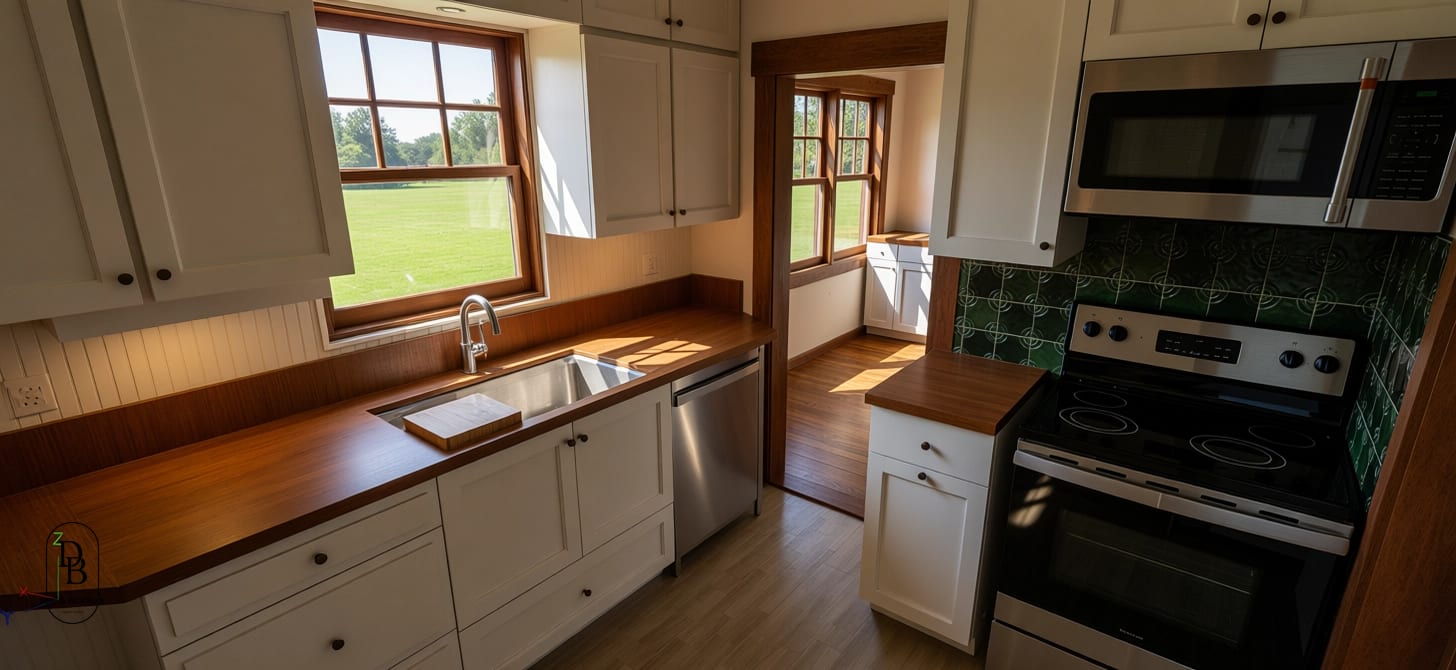
Kitchens and bathrooms are where clients most want modern function, and they are also where character disappears fastest. We hold the room proportions and the window placement, run new plumbing where it does the least damage to original fabric, and pick fixtures and cabinetry that suit the age of the house instead of fighting it.
Working With The City On A Historic Property
A historic property usually comes with an extra layer of review. Depending on the designation and the district, exterior changes can require approval before a building permit is issued, and the questions are about materials, proportions, and whether a change could be reversed later. We handle it the way we handle permitting on any project: prepare the documentation, submit early, and respond to comments directly instead of letting them sit. It helps to arrive with photographs, existing conditions drawings, and a clear description of what is being repaired and what is being replaced. Reviewers are generally reasonable with an owner who is keeping original fabric and can show it. What applies differs by property and by district, so we confirm the rules for your address before we promise anything about the exterior.
The Test At The End
When the work is done, a good restoration feels like the house has always been this way and simply had a very good decade. The systems are quiet and current, the envelope is tight, the kitchen works for the family living there, and a neighbor who has walked past for thirty years cannot point to what changed on the front of the house.
If you own an old house and you are trying to decide what is worth saving, walk it with someone who will tell you plainly. We are glad to be that opinion.